
Floor Levelling Adelaide
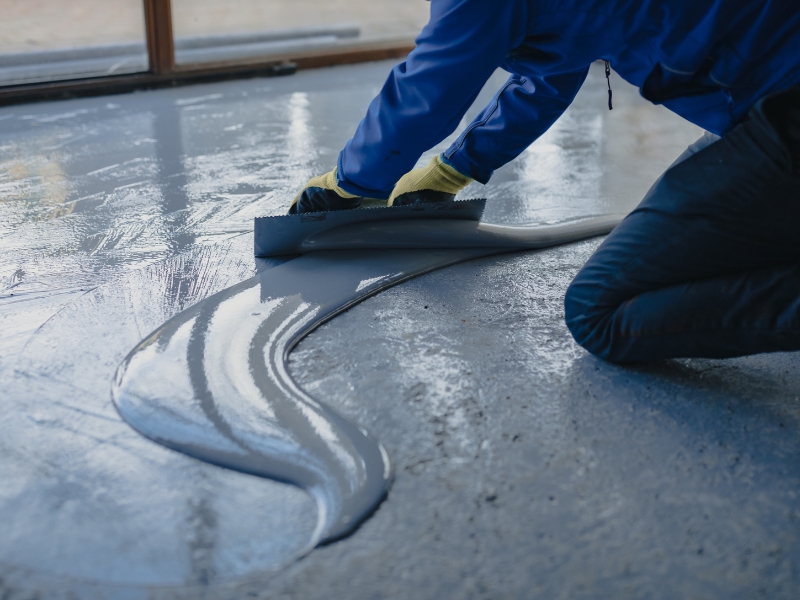
Floor levelling is a process that flattens and smooths an uneven subfloor. It creates a stable, even base for new floor coverings such as tiles, vinyl, timber or carpet, helping them sit properly once installed.
The cost of floor levelling depends on the size and condition of the area, how uneven the subfloor is and the preparation needed before work can begin. Elite Epoxy & Polish SA will inspect your site, discuss your flooring plans and provide a free quote based on the work required.
Once the levelling is complete, new flooring can typically be installed after 12 to 72 hours, depending on the product used and site conditions. Please call 0413 503 888 today to discuss your needs. Alternatively, browse our services.
Signs Your Floor Needs Levelling
Your floor may need attention if you notice any of the following:
- Visible dips, humps or sloping areas
- Furniture that rocks on a flat base
- Cracked, loose or drummy tiles
- Gaps beneath skirting boards
- Doors scraping or catching
- Vinyl or timber planks moving underfoot
- Carpet wearing faster in certain places
Our team will inspect the surface and find the cause of the unevenness. They will advise if any movement, moisture or damage within the building may need repair first.
What Affects the Cost
Several factors can influence the work required, including:
- Whether the subfloor is concrete, timber or particleboard
- The total floor area
- Cracks, gaps and loose sections
- The thickness of compound required
- Grinding needed on high spots
- Stairs or limited equipment access
- Furniture, appliances or existing floors that must be moved
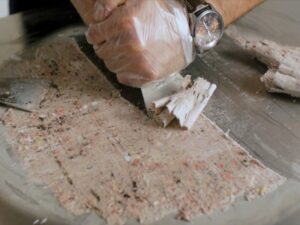
Floor levelling involves more than pouring compound over an uneven surface. Depending on the condition of your floor, the work may include an inspection, grinding, dust control, priming, mixing, pouring and checking the finished surface. Preparing the subfloor properly helps create a stable base for your new flooring.
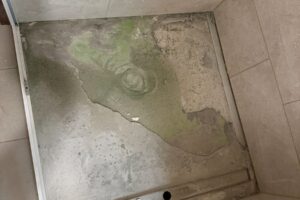
Levelling Concrete Slabs and Timber Subfloors
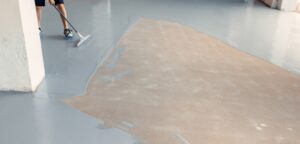
Concrete and timber behave differently, which is why each requires its own preparation method and suitable materials. Here’s how they compare.
Levelling Compounds and Screeds We Use
At Elite Epoxy and Polish SA, we work with a wide range of product types. They may include:
- Cement-based self-levelling compounds for concrete
- Fibre-reinforced compounds for suitable timber subfloors
- Feather-finish products for small surface corrections
- Repair mortars for cracks and deeper holes
- Primers made for the selected surface and compound
- Screeds for thicker corrections where self-levelling products are unsuitable
Our team can explain the benefits of each in more detail.
The Tolerance We Work To
A floor does not always need to be perfectly level. But it must be flat enough for the flooring being installed.
For resilient flooring such as vinyl, AS 1884:2021 recommends a planeness tolerance of 4 mm beneath a 2-metre straightedge and a smoothness tolerance of 1 mm over 150 mm.
We always check the floor against the requirements for your chosen product. This is important because poor substrate preparation may cause boards to move, tiles to crack or adhesive to fail.
How Long It Takes to Cure
Depending on the material used, a thin layer may be ready for certain flooring after 12 to 24 hours. However, thicker pours can need 48 to 72 hours or longer.
Our team will advise you of the length of time required for curing.
Get a Free Floor Levelling Quote
If you are interested in receiving a free floor levelling quote in Adelaide, please call Elite Epoxy & Polish SA on 0413 503 888 or contact us online.
Frequently Asked Questions About Floor Levelling
Floor levelling involves smoothing and correcting uneven surfaces by filling in low spots and addressing high spots. This process ensures a flat and stable base for installing new flooring materials such as tiles, carpet, or timber.
Uneven floors can cause issues with the installation of new flooring. If the surface is not level, it can lead to poor adhesion, cracking, and uneven wear. It can also create tripping hazards, which makes the area unsafe.
We use a variety of techniques and high-quality equipment to ensure a smooth and even surface. This may involve applying levelling compounds, grinding, or using self-levelling materials, depending on the specific requirements of the floor.
While there are DIY options available, professional services guarantee the best results. Incorrect methods or materials can lead to further damage or uneven surfaces. Our experts ensure a durable and precise finish that lasts.
The time required depends on the size of the area and the severity of the unevenness. Generally, the work takes a few hours to a day, with some drying and curing time needed before any new flooring can be applied.
No, we take special care to preserve the integrity of your existing floor. Our experienced team uses the most suitable methods to smooth and level the surface without causing harm to the underlying material.
If you notice visible dips, bumps, or cracks in your floor, it’s likely that the surface isn’t level. Uneven floors can cause new installations to shift or fail, leading to long-term damage. We can assess your floor to determine the best course of action.
Levelling uneven floors is a complicated process. It requires a skilled team to inspect, grind, prime, and repair the surface, then use specialist tools to ensure long-lasting adhesion and durability.
Depending on the compound, its thickness, and site conditions, the drying process may take 12 to 72 hours to complete.
Yes. Levelling floors creates the smooth, level surface vinyl needs for proper adhesion.